Kabul
Kabul is the emotional and geographical heart of The Kite Runner, the city where Amir's identity is forged and his deepest wounds are inflicted. It is not merely a backdrop but a living entity that mirrors the novel's themes of loss, guilt, and the impossible desire to return to a past that no longer exists. From the affluent, tree-lined streets of Wazir Akbar Khan to the dusty, rubble-strewn alleys of Karteh-Seh, Kabul is the stage for both the idyllic childhood of Amir and Hassan and the brutal acts that shatter it. The city's transformation from a place of kite fights and pomegranate trees to a landscape of checkpoints, executions, and Taliban patrols is the novel's most powerful symbol of a world irrevocably changed.
The Kabul of Childhood: A Lost Paradise
For the first twelve years of his life, Amir's Kabul is a world of privilege and wonder. The family home in the Wazir Akbar Khan district, built by Baba, is described as the most beautiful house in the district, with marble floors, a crystal chandelier, and a sprawling backyard with cherry trees and a servants' hut where Hassan lives. This is the Kabul of poplar trees, of climbing to annoy neighbors with a shard of mirror, of the pomegranate tree near the cemetery where Amir carves "Amir and Hassan, the Sultans of Kabul." It is a city of vibrant bazaars like Shar-e-Nau, where the boys spend their allowance on Coca-Cola and rosewater ice cream, and of Cinema Park, where they watch Westerns like Rio Bravo and The Magnificent Seven. The city's rhythms are marked by the call to prayer, the annual kite-fighting tournament, and the bustling streets filled with merchants and beggars. This Kabul is a place of safety and joy, a paradise that Amir will spend the rest of his life trying to recapture.
The Fall: From Monarchy to War
The first crack in this idyllic world appears on July 17, 1973, when a bloodless coup ends King Zahir Shah's forty-year reign. The night is filled with the roar of thunder and the rat-a-tat-tat of gunfire, sounds that are foreign to the children of that generation. Amir later reflects that this was the beginning of the end of their way of life, a prelude to the communist coup of 1978 and the Soviet invasion of December 1979, which would bring "the death of the Afghanistan I knew." The city's political upheaval is immediately followed by a personal confrontation with Assef, a sociopathic boy who embodies the ethnic hatred that will later consume the nation. Assef declares that "Afghanistan is the land of Pashtuns" and that Hazaras like Hassan pollute the homeland. This moment on a barren patch of land near the hill foreshadows the systematic violence that will define Kabul's future.
The City of Ghosts: War and Taliban Rule
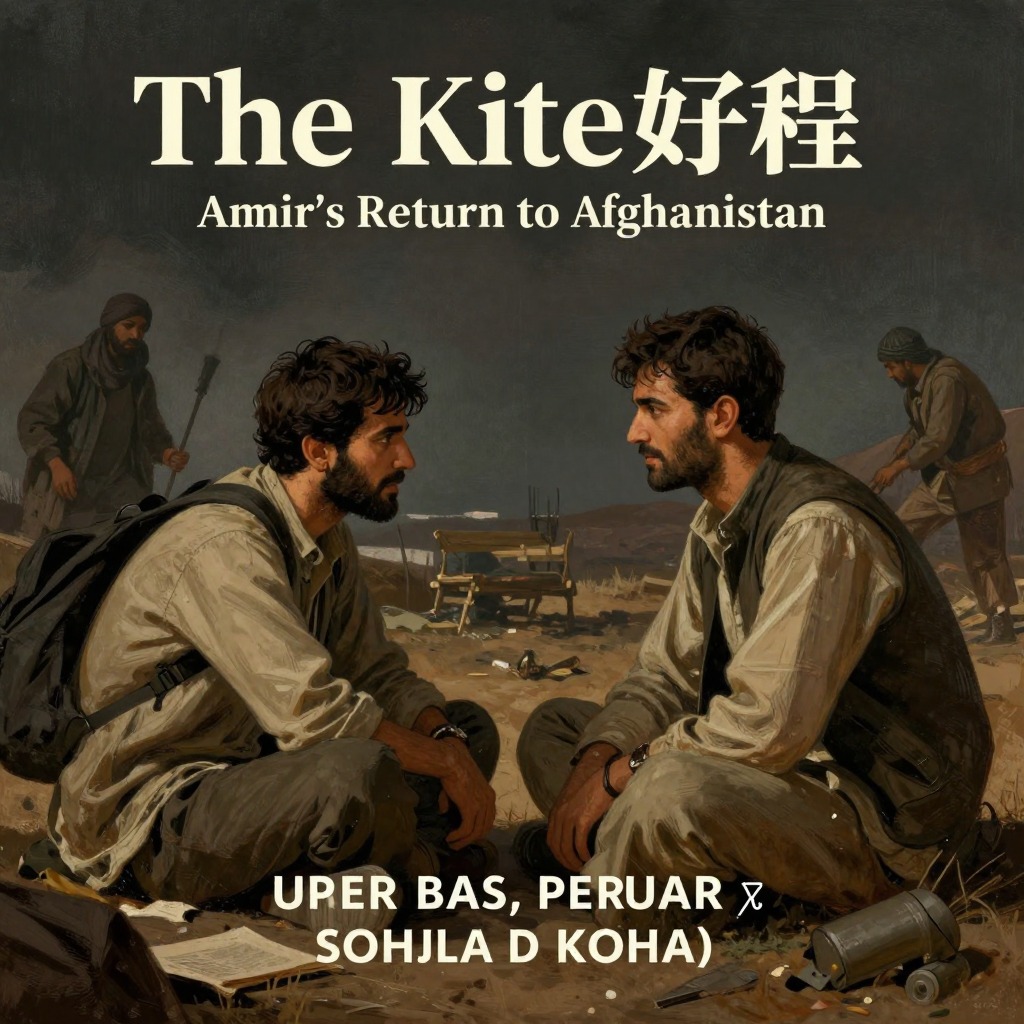
When Amir returns to Kabul in 2001, he finds a city transformed into a wasteland. The drive from Jalalabad takes over four hours on cratered roads, past burned-out Soviet tanks and the charred remains of villages. The city itself is a landscape of "rubble and beggars," with children in rags chanting for money and the smell of diesel from generators replacing the old scent of lamb kabob. The once-majestic Jadeh Maywand is now a giant sand castle of collapsed buildings, and the trees that lined the streets have been cut down for firewood or by Soviet snipers. The Wazir Akbar Khan district, where Amir's father's house still stands, is one of the few areas that remains intact, but only because it is now home to the Taliban and their foreign allies. The house itself is a picture of "fallen splendor," with a sagging roof, cracked plaster, and a jeep parked in the driveway where Baba's black Mustang once belonged. The pomegranate tree on the hill is now wilted and leafless, and the carving of "Amir and Hassan, the Sultans of Kabul" has dulled almost to the point of invisibility. The city is under the brutal rule of the Taliban, who patrol in red Toyota pickups, enforce a strict dress code, and carry out public executions at Ghazi Stadium. It is in this Kabul that Amir confronts Assef, now a Talib official, in a house on Sarak-e-Mehmana, the Street of the Guests, to rescue Hassan's son, Sohrab.
The Unforgotten Home: Memory and Redemption
Despite its physical destruction, Kabul remains an inescapable presence in Amir's life. It is the city of his first memories, the place where he and Hassan "fed from the same breast" and spoke their first words. The past, as he says, "claws its way out," and Kabul is the embodiment of that past. His journey back is not just a physical one but a descent into the memory of his own cowardice. Standing on the soil of his ancestors, he feels a surprising kinship with the old land, sensing "Afghanistan humming under my feet." The city is the site of his greatest sin—watching Hassan be raped in an alley—and the place where he must finally atone for it. The novel's final act of redemption, flying a kite with Sohrab in a Fremont park, is a direct echo of the Kabul of his childhood, a way of bringing a fragment of that lost paradise into the present. Kabul, in its ruined state, is not just a place of sorrow but the necessary ground for Amir's moral rebirth, the place where he finally learns to stand up for himself and, in doing so, becomes worthy of the brother he betrayed.